



Our Approach

15.GROUP

15.Group takes ideas from business requirement to operational reality, combining strategic thinking, technical development and practical implementation.

Powerful and Easy
FROM REQUIREMENT TO REALITY

Technology Starts With
Understanding the Business

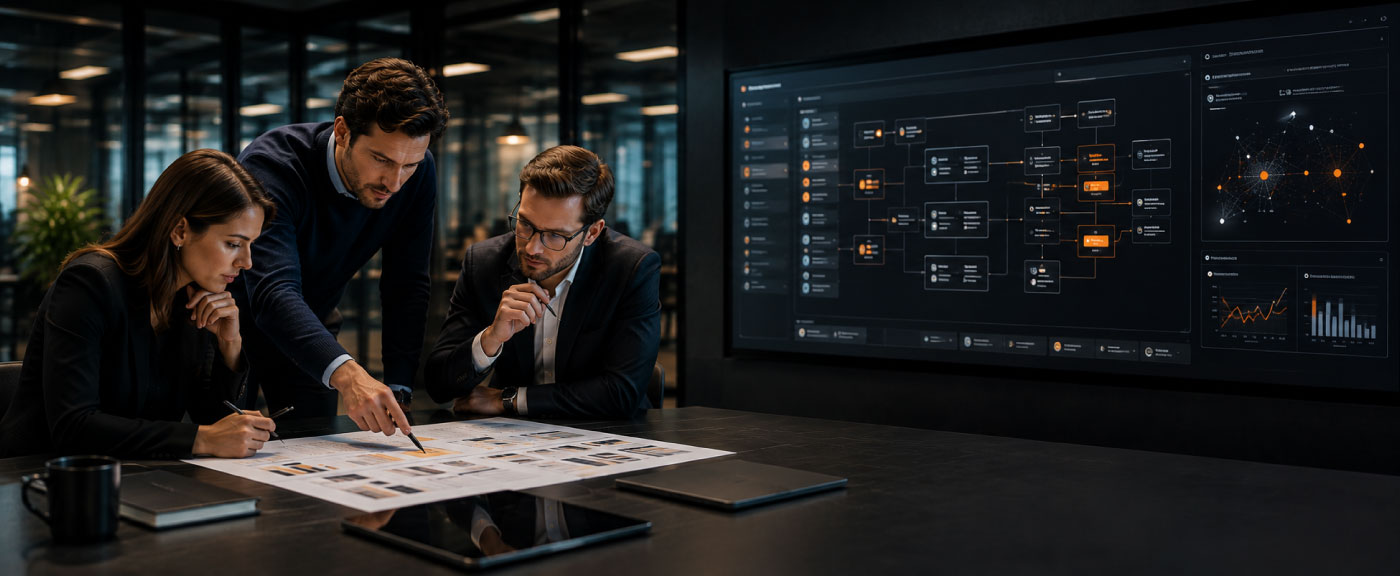
We begin by understanding the organisation, its objectives and the operational challenge that technology needs to address.


Rather than starting with a predetermined product or platform, we examine how people work, where information moves, how decisions are made and where existing systems create constraints.


This gives us the context required to determine what should be improved, connected, automated or developed — before defining the technology itself.

Business Context
Understand the organisation, environment and commercial objectives.
Operational Reality
Examine how work, information and decisions actually move.
Existing Environment
Identify the systems, infrastructure and constraints already in place.
Defined Opportunity
Establish where technology can create meaningful operational value.
DEFINING THE DIRECTION


Clarity Before Complexity.

Once the requirement is understood, we turn what we have learned into a clear direction for development.

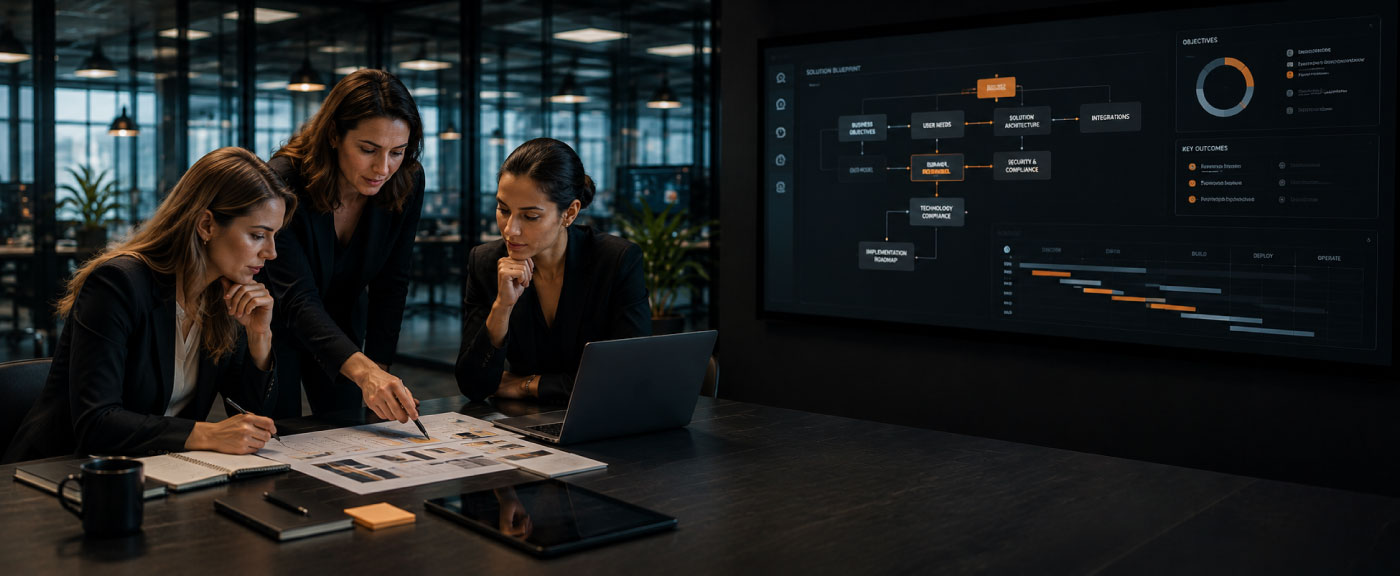
Business priorities, operational requirements and technical constraints are assessed together to establish the right scope, architecture and delivery priorities.


This creates a practical foundation for development — defining what needs to be connected, improved or created without introducing unnecessary complexity.

01  Define the Outcome

Establish the operational or commercial result the work needs to achieve.

02  Set the Scope

Identify the processes, systems, people and information involved.

03  Shape the Architecture

Determine how technology, data and infrastructure need to work together.

04  Establish Priorities

Sequence development around value, dependencies, risk and practical delivery.

FROM PLAN TO PRODUCT

Develop. Test. Refine.

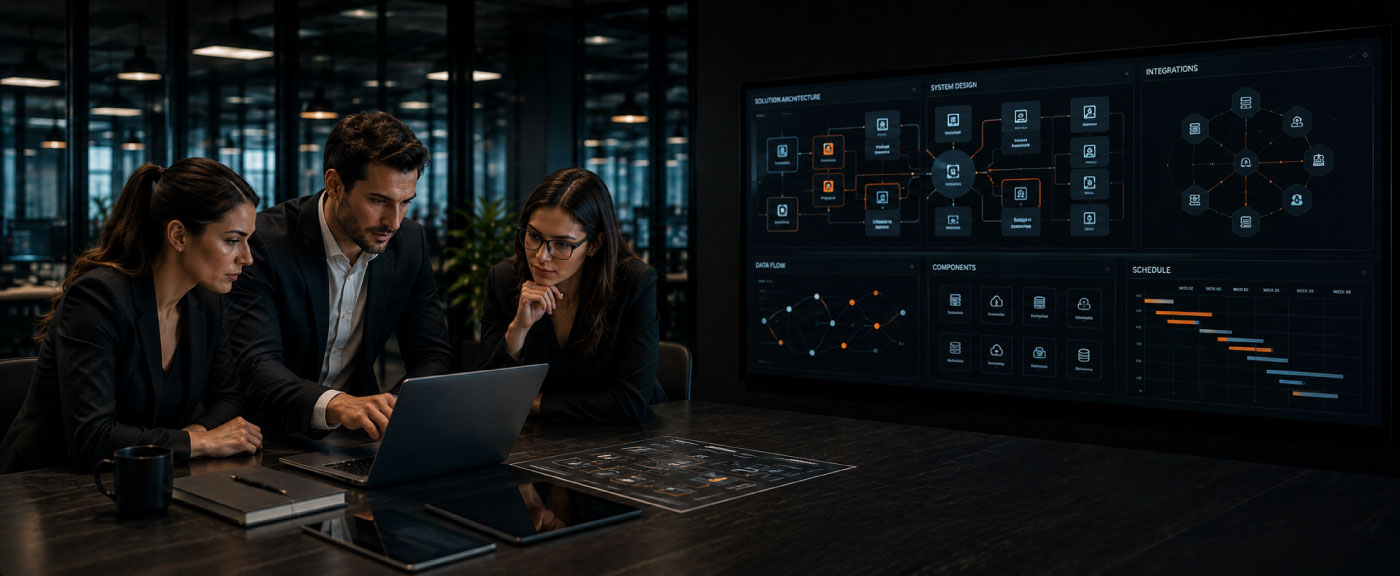
Development moves forward in controlled stages, turning defined requirements into technology that can be tested against real operational needs.


Software, intelligence, automation and connected technology are developed as appropriate to the solution, with integration considered throughout rather than added at the end.


Regular validation allows assumptions to be tested, feedback incorporated and priorities adjusted before unnecessary complexity or cost is introduced.

01  Develop

Build the core functionality around agreed requirements and architecture.

02  Integrate

Connect relevant systems, data, workflows and infrastructure.

03  Validate

Test functionality, usability and operational fit against real requirements.

04  Refine

Use evidence and feedback to improve the solution before wider deployment.

DELIVERY FRAMEWORK

A Clear Route From Decision to Deployment

Every engagement is different, but the work follows a disciplined progression that keeps commercial objectives, technical decisions and operational requirements aligned.

THROUGHOUT THE ENGAGEMENT

Built Into Every Stage.

Certain requirements cannot be treated as final checks. They influence decisions from the beginning and remain part of the work through development, deployment and ongoing operation.

01 — Commercial Relevance
Decisions remain connected to the business objective, ensuring technical development continues to serve a defined operational purpose.
02 — Security by Design
Security requirements are considered within architecture, integrations and workflows rather than applied only after development.
03 — Operational Fit
Technology is shaped around the environment in which it will actually be used, including existing systems, teams and processes.
04 — Measurable Progress
Defined outcomes and practical milestones provide visibility into what has been achieved and what should happen next.
05 — Adaptability
05 — Adaptability
Architecture and development choices allow systems to respond to changing requirements without unnecessary rebuilding.
06 — Accountability
06 — Accountability
Responsibilities, decisions and controls remain clear throughout development and into live operation.
FROM IDEA TO MARKET

Turning Opportunity Into Enterprise Value

We take promising opportunities through validation, development and commercialisation, creating businesses designed to remain relevant as markets and customer requirements change.

01: Opportunity
01: Opportunity
We assess genuine market and operational needs where new technology can create a credible commercial proposition.
02: Proposition
02: Proposition
The opportunity is shaped into a defined product, service or business with a clear purpose and intended market.
03: Foundation
03: Foundation
The technology, expertise and shared Group capabilities required to support the proposition are brought together.
04: Proof
04: Proof
Commercial assumptions and practical requirements are examined before significant resources are committed to expansion.
05: Market
05: Market
A clear route to customers, partnerships and deployment turns the proposition into an operating commercial venture.
06: Momentum
06: Momentum
The business continues to strengthen its position as customer needs, technologies and market conditions change.

START A CONVERSATION

Bring Us the Challenge.

If you are exploring a new opportunity, addressing an operational challenge or considering where technology could make a meaningful difference, tell us what you are working on.

What Would You Like to Discuss?

Privacy acknowledgement

Please read our Privacy Policy