


• Home
  • Enterprise AI & Intelligent Systems

Enterprise AI & Intelligent Systems

15.GROUP

15.Group designs and develops intelligent systems that turn organisational knowledge, data and workflows into practical operational capability.

Powerful and Easy
AI DESIGNED AROUND THE ORGANISATION

Enterprise AI becomes useful when it understands the
information, processes and decisions that define how an organisation operates.

15.Group develops intelligent systems around the specific environment in which they will work. Rather than adding generic AI tools to existing processes, we examine where intelligence can improve access to information, coordinate activity and support better decisions.


Models, enterprise data, applications and workflows can then be connected within a controlled architecture, allowing intelligence to operate across relevant parts of the organisation while maintaining appropriate permissions and governance.


The result is AI designed for a defined operational role — integrated into the business rather than sitting alongside it.

Organisational Context
Intelligence informed by the organisation's data, processes, terminology and operating environment.
Connected Information
Relevant knowledge and data brought together across otherwise fragmented systems and sources.
Workflow Integration
AI incorporated into existing applications and processes where it can provide practical assistance.
Controlled Access
Permissions, boundaries and governance determine what intelligent systems can access, recommend and action.
OPERATIONAL APPLICATIONS


Intelligence Where Work Happens.

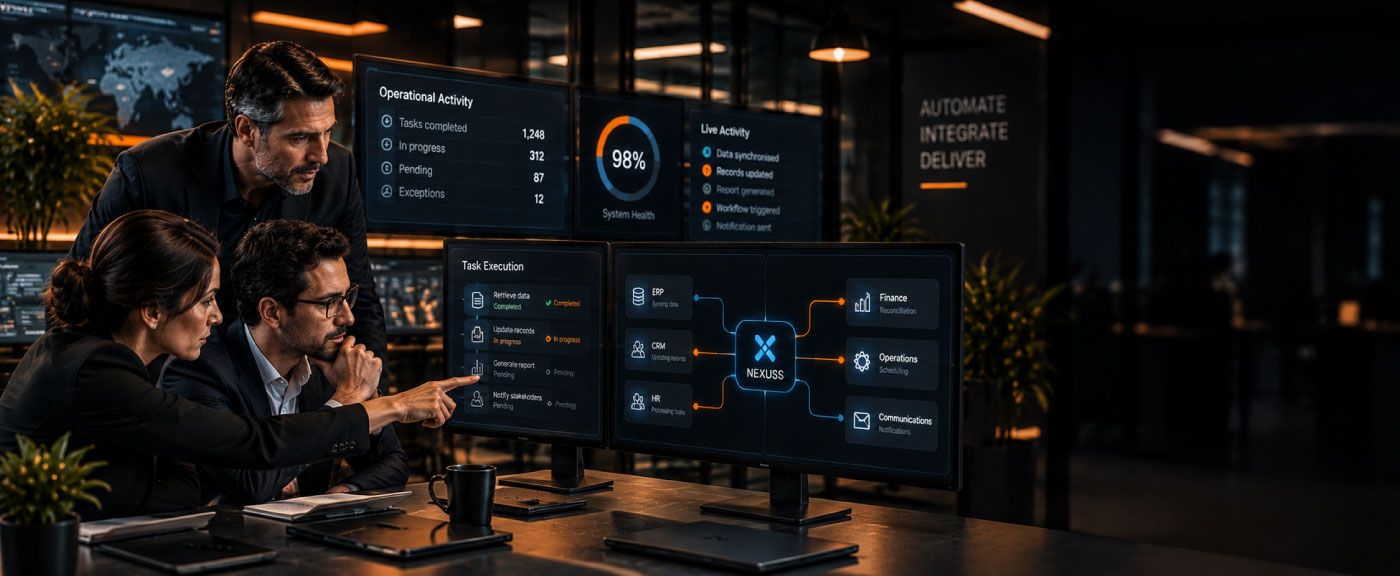
Intelligence can work across the organisation, supporting people, connecting activity and acting on information where it creates practical value.

Its role depends on the work being performed. Some systems help people find and interpret information; others coordinate activity, surface recommendations or carry out authorised actions across connected applications.

The objective is to place intelligence within the operational flow of the business, rather than creating another isolated tool that employees have to manage.

01  Find & Understand

Bring relevant information into context from documents, data, applications and organisational knowledge.

02  Coordinate Work

Connect tasks, information and systems so activity can move more effectively across the organisation.

03  Support Decisions

Surface relevant information, patterns and recommendations when judgement or action is required.

04  Take Action

Perform permitted tasks within connected systems and initiate defined workflows when appropriate.

INTELLIGENT CAPABILITY

Different Roles. One Connected Intelligence.

Enterprise intelligence does not need to take the same form everywhere. Different capabilities can be designed around specific responsibilities while sharing the organisational context, information and permissions required to operate effectively.


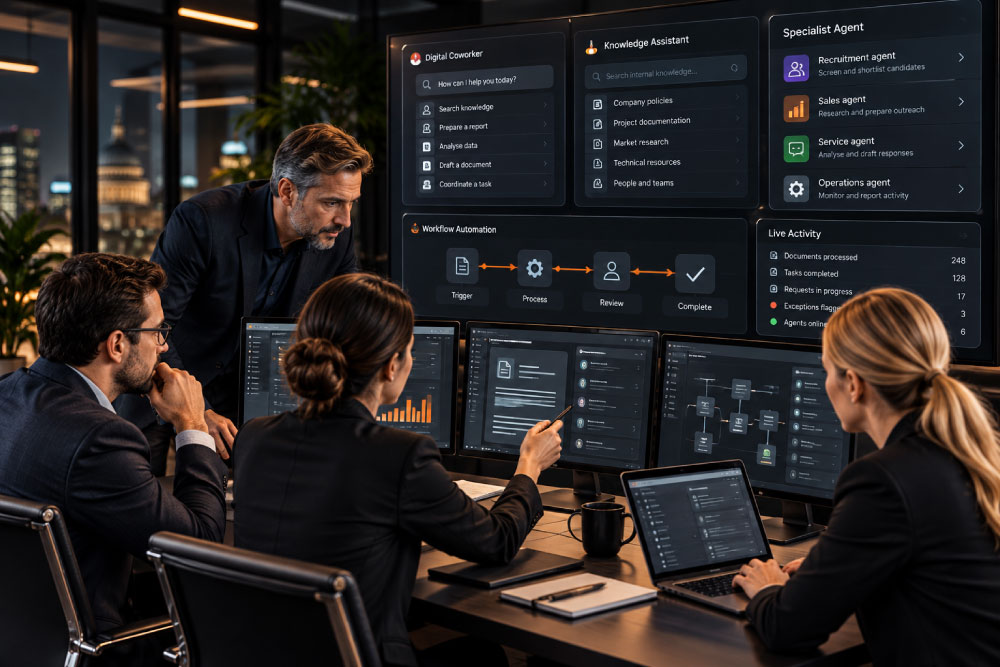
A system may assist an individual, provide specialist expertise, coordinate a workflow or operate across several applications. What matters is that its role and authority are clearly defined.


This allows intelligence to be introduced where it has a practical purpose, with capabilities working independently or together as requirements develop.

01  Digital Coworkers

Work alongside people to research, prepare, coordinate and support everyday operational activity.

02  Specialist Agents

Perform defined responsibilities within areas such as sales, recruitment, service, administration and operations.

03  Knowledge Assistants

Provide conversational access to approved organisational information, documents and business knowledge.

04  Autonomous Workflows

Coordinate permitted activities across applications and systems, with defined controls and escalation points.

INTELLIGENCE IN OPERATION

From Assistance to Autonomous Action

Enterprise intelligence can operate at different levels of responsibility. The appropriate model depends on the task, the systems involved and how much authority the organisation chooses to delegate.

ENTERPRISE REQUIREMENTS

What Intelligence Needs to Work.

Useful enterprise intelligence depends on more than the model itself. It needs access to the right information, clear authority, reliable connections and defined boundaries for how it operates.

01 — Organisational Context
Intelligence works with the information, terminology and operating context specific to the organisation.
02 — Connected Systems
Relevant applications, data and services are connected so intelligence can work across the existing technology environment.
03 — Defined Authority
Permissions determine what intelligence can access, recommend, change or execute on behalf of the organisation.
04 — Human Intervention
People remain involved wherever judgement, approval, exception handling or escalation requires human responsibility.
05 — Traceable Activity
Actions and system interactions can be recorded so organisations retain visibility into how intelligent capabilities are being used.
06 — Controlled Evolution
Capabilities can expand as requirements change, without giving systems broader access or authority simply because the technology allows it.
BUSINESS OUTCOMES

Intelligence That Changes How Work Gets Done.

The value of enterprise intelligence is measured by what changes in the organisation — how quickly people can work, how effectively information is used and how consistently operations can respond.

01: Faster Response
01: Faster Response
Bring relevant information and capability closer to the point of need, reducing time spent searching, waiting or transferring work.
02: Better Decisions
Give people clearer context and timely insight so decisions can be made with a stronger understanding of the situation.
03: Less Repetition
03: Less Repetition
Move routine and repeatable activity into intelligent workflows, allowing people to concentrate on work requiring judgement and expertise.
04: Greater Consistency
Apply organisational knowledge, processes and defined requirements more consistently across teams, systems and locations.
05: Connected Operations
Reduce fragmentation by allowing information, actions and workflows to move across previously disconnected parts of the organisation.
06: Scalable Capability
Extend knowledge and operational capacity across the business without requiring every increase in workload to be matched by an equivalent increase in manual effort.

DISCUSS ENTERPRISE INTELLIGENCE

Put Intelligence to Work.

If you are exploring how AI, intelligent systems or digital coworkers could operate within your organisation, tell us what you are trying to achieve.


We can discuss the operational requirement, existing environment and where intelligent capability could create practical value.

What Would You Like to Discuss?

Privacy acknowledgement

Please read our Privacy Policy