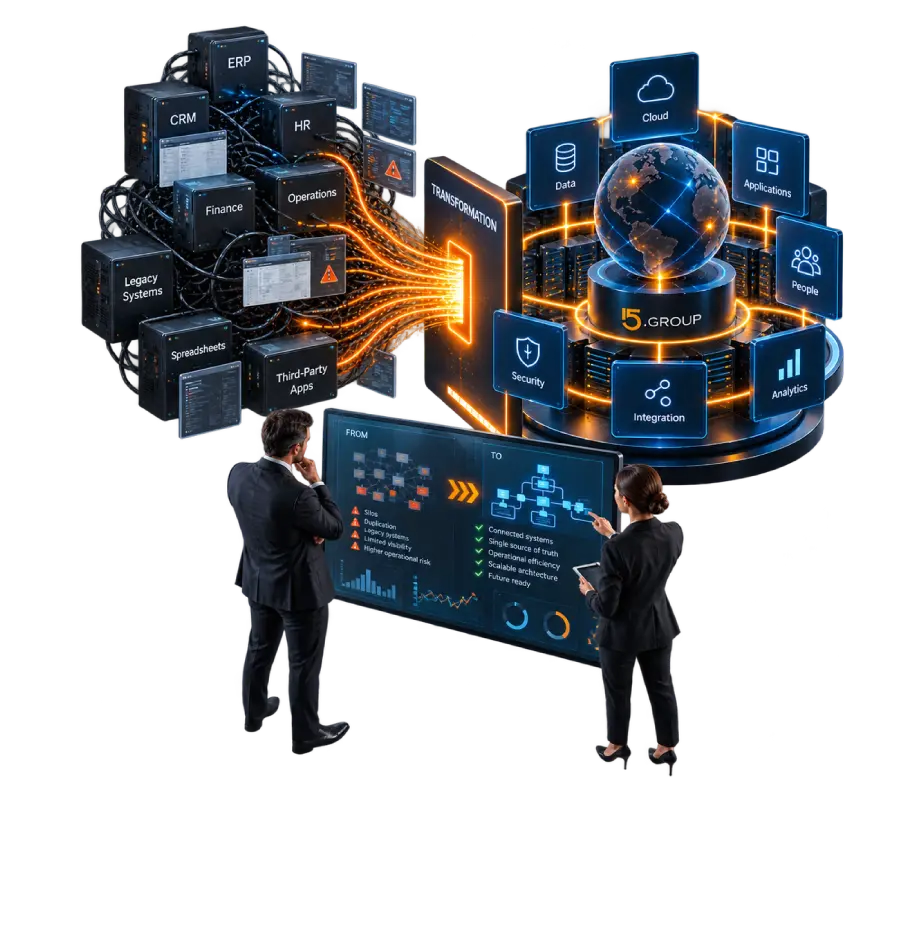



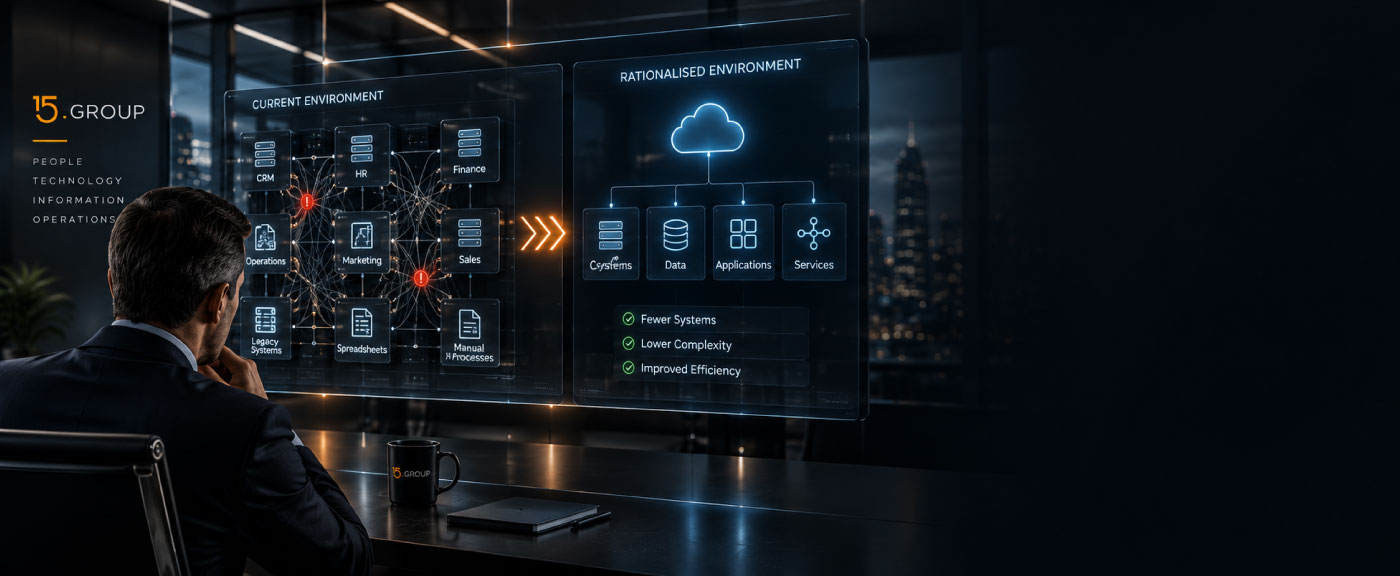

Rationalise:
Reduce Unnecessary Complexity
Reduce Unnecessary Complexity
Identify duplicated, redundant or outdated technology and simplify the environment before adding further capability.
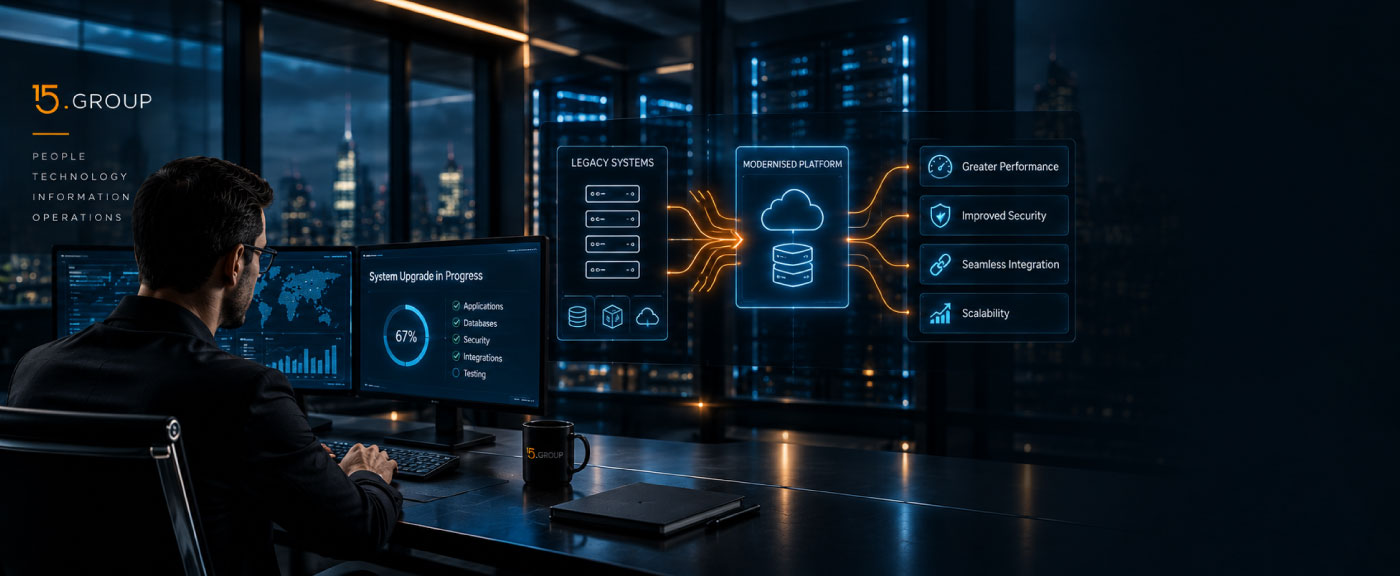

Modernise:
Strengthen Critical Systems
Strengthen Critical Systems
Improve or replace technology that limits performance, integration, security or the organisation’s ability to change.
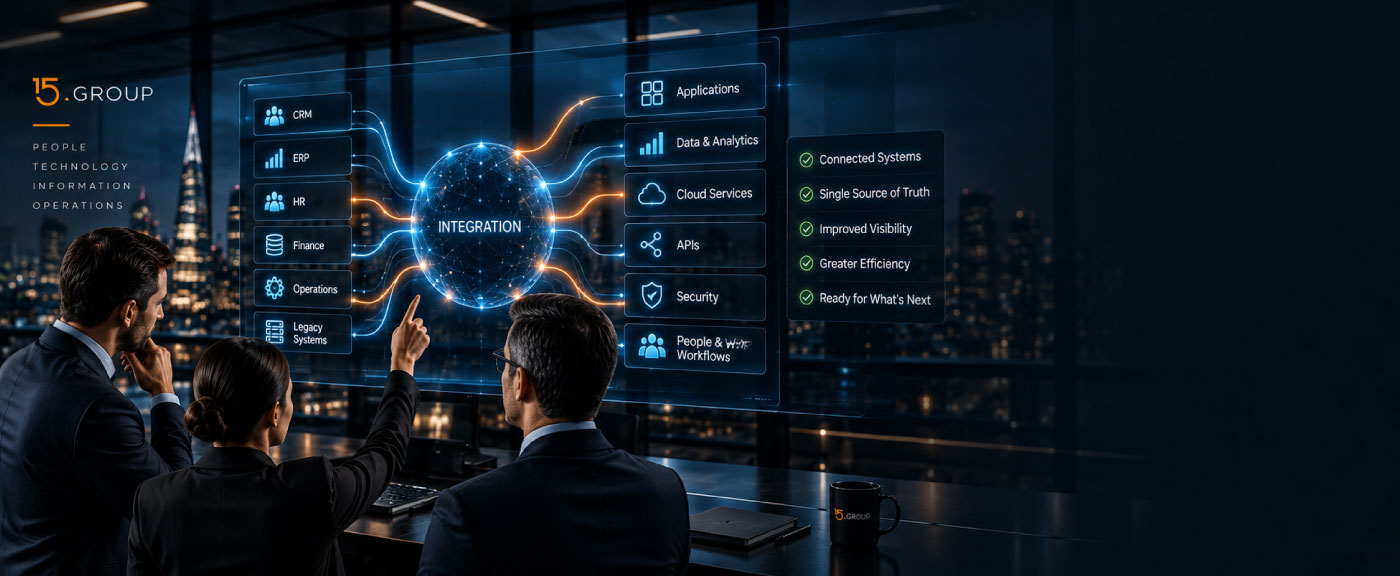

Connect:
Create a Unified Environment
Create a Unified Environment
Bring applications, information and services together through clearer architecture, shared data and defined integration.

Advance:
Enable What Comes Next
Enable What Comes Next
Introduce new digital capabilities on a stronger foundation, allowing the organisation to adopt emerging technology without rebuilding the environment around every new requirement.
01 — Business Continuity
Plan change around live operations so critical services can continue while the technology environment evolves.

02 — Existing Value
Retain systems, information and capabilities that continue to serve the organisation effectively.

03 — Managed Transition
Introduce change in practical stages rather than creating unnecessary disruption through wholesale replacement.

04 — Data Integrity
Protect the quality, availability and continuity of organisational information throughout the transition.
05 — Interoperability
Ensure existing and new technologies can work together while the wider environment is being modernised.
06 — Long-Term Flexibility
Make architectural decisions that preserve future options rather than creating the next generation of technology constraints.

01: Reduced Complexity
Fewer unnecessary systems, dependencies and workarounds make the technology environment easier to understand and manage.
02: Faster Change
New requirements can be introduced without repeatedly working around rigid legacy architecture.
03: Better Connectivity
Applications, information and services can work together across a more coherent enterprise environment.
04: Stronger Foundations
Critical technology is better positioned to support future development, integration and emerging capabilities.
05: Greater Visibility
A more connected environment provides a clearer understanding of systems, information and operational dependencies.
06: More Options
The organisation gains greater freedom to adopt new technology, change processes and respond to future requirements.