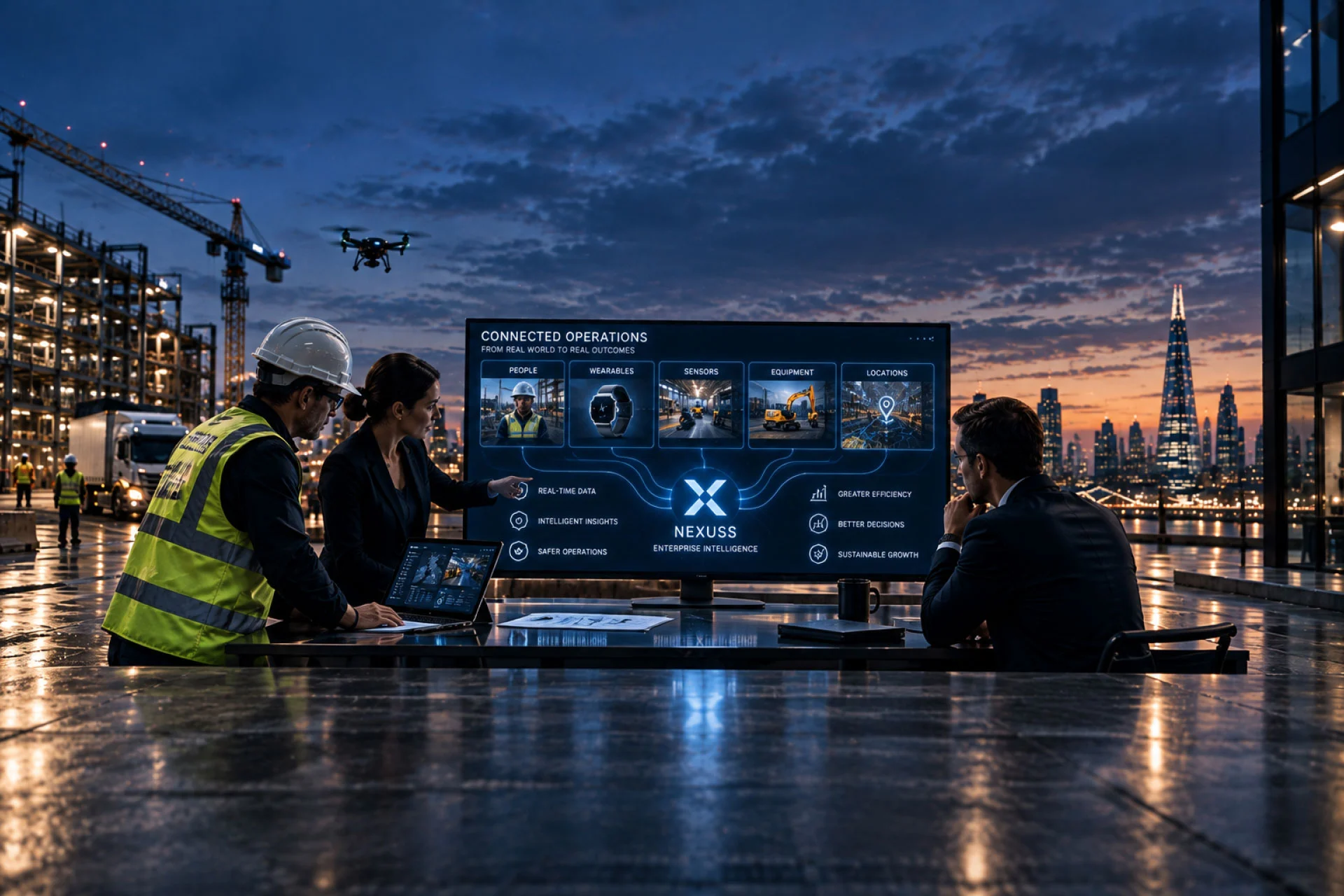
Much of digital transformation has concentrated on information that already exists inside computers.
Customer records, financial information, documents, communications and workflows have progressively moved into connected digital environments. Artificial intelligence is now making those environments more useful by helping organisations interpret information and interact with systems in new ways.
The physical world presents the next important connection.
People work in warehouses, construction sites, factories, hotels, hospitals, vehicles and public environments where activity cannot be understood entirely through conventional enterprise software. Information is being created continuously through movement, equipment, environmental conditions and human activity.
Connected devices can provide a bridge between those environments and the digital organisation.
Wearable technology, cameras, sensors and connected equipment can capture information closer to where activity actually occurs. Used appropriately, that information can contribute to operational awareness, safety, communication and better-informed decisions.
Extending Digital Capability Beyond the Screen
A digital enterprise should not necessarily end at the edge of a laptop or smartphone.
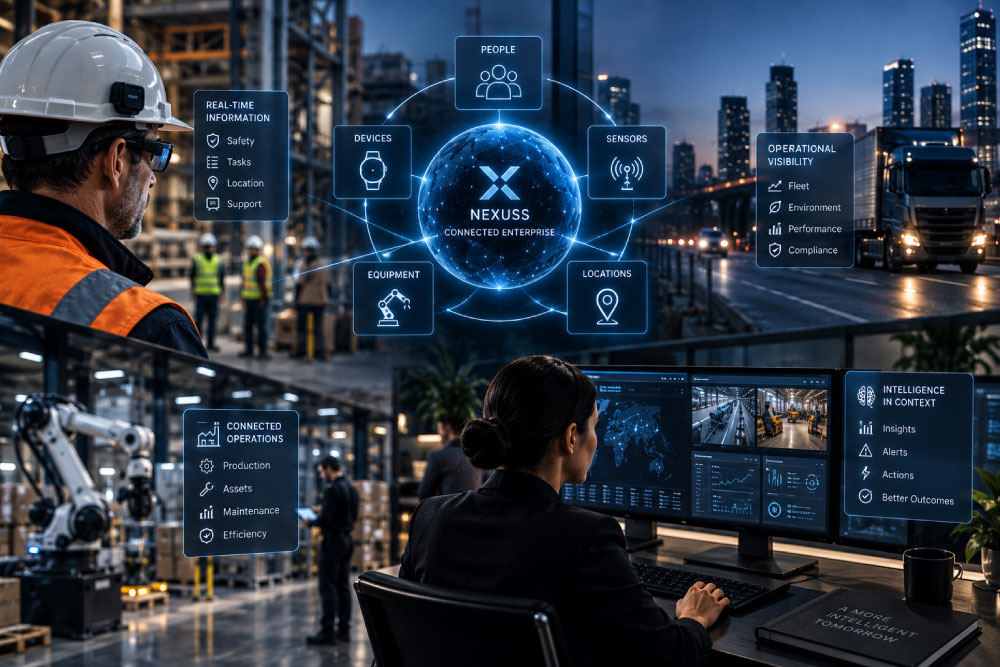
Different working environments create different technology requirements. An employee moving through a large operational site may benefit from information delivered through wearable technology. Equipment can provide operational data directly rather than relying entirely on manual reporting. Environmental sensors can identify changing conditions as they occur.
The value is not simply in connecting more devices.
Connected technology becomes useful when information from the physical environment can contribute appropriately to the wider systems and processes used by the organisation.
This creates a two-way relationship. Physical environments can provide information to digital systems, while relevant information and services can be delivered back to people where they are working.
The result is a broader interpretation of enterprise technology, one in which digital capability can extend into the places, equipment and environments where real-world activity happens.
Connecting Physical Operations With Enterprise Intelligence
Capturing information from the physical world is only the beginning.
A sensor reading, equipment status or location signal has limited value when it remains isolated from the systems used to manage the wider organisation. Its usefulness increases when that information can contribute to relevant operational processes.
A change in environmental conditions might require attention. Equipment behaviour could indicate that maintenance should be considered. Location information can provide additional context for logistics or field operations. Wearable devices can give employees access to relevant information without requiring them to leave the environment in which they are working.
The objective is not to create a constant stream of disconnected data. It is to identify information that has operational value and connect it with the people and systems capable of using it.
This also makes governance important. Organisations need to determine what information should be collected, why it is required, how it is protected and who should be permitted to use it. Connected technology should serve a defined operational purpose rather than introduce unnecessary monitoring.
As enterprise intelligence develops, the boundary between digital systems and physical operations will continue to narrow. Software can gain a clearer understanding of real-world activity, while people working away from traditional screens can gain more immediate access to useful digital capability.
For 15.Group, this creates an opportunity to think about enterprise technology as something that operates across both digital and physical environments, connecting information with the places where work actually happens.