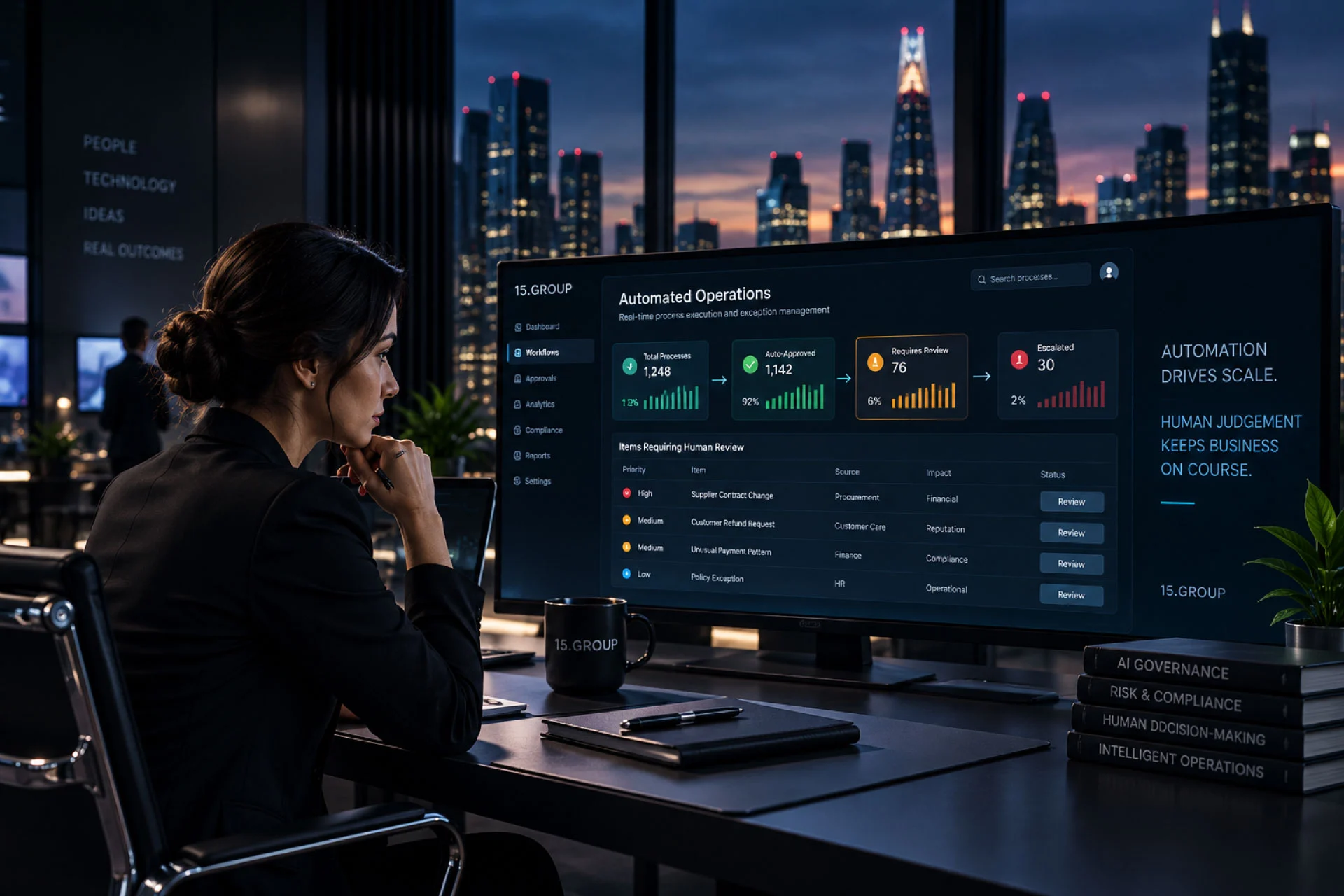
Automation has traditionally been associated with predictable, repetitive processes. A defined action produced a defined result, and the boundaries of the system were relatively easy to understand.
Artificial intelligence is changing that relationship.
Modern systems can interpret information, generate content, recommend actions and increasingly participate in workflows that previously depended on people. As these capabilities improve, organisations face a more important question than simply determining what can be automated.
They need to decide what should be automated.
The distinction matters because efficiency is only one consideration. Decisions can also involve judgement, commercial consequences, customer relationships, regulatory obligations and responsibility for the outcome.
Automation Does Not Remove Accountability
Delegating an activity to technology does not necessarily transfer responsibility for the result.
An automated system may identify an anomaly, prioritise a customer request or recommend a course of action. In some circumstances, allowing the system to proceed independently may be entirely appropriate. In others, the consequences justify human review before an action is completed.
The appropriate level of oversight therefore depends on context.
Organisations need to understand what a system is doing, what information it is using and what happens when its output is incorrect or unexpected. They also need a clear understanding of who retains authority when intervention is required.
This becomes increasingly important as automation moves beyond individual tasks and begins coordinating activities across multiple business systems.
Designing for the Right Level of Control
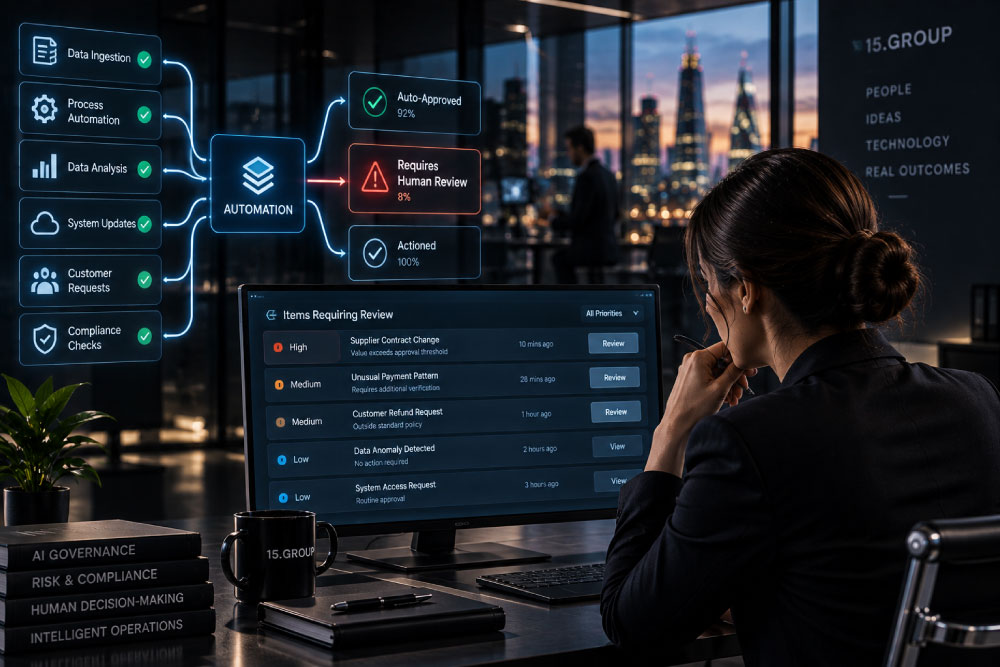
Human oversight does not mean requiring a person to approve every automated action. Doing so can undermine the efficiency that automation is intended to create.
The objective is to establish appropriate levels of control.
Low-risk, repeatable activities may operate with considerable autonomy. Actions with greater financial, operational, regulatory or customer consequences may require confirmation. Exceptional situations can be escalated when predefined conditions are reached or when the system lacks sufficient confidence to proceed.
This creates a more useful relationship between people and automation. Technology handles activities where speed, consistency and scale provide an advantage. People remain involved where context, judgement or responsibility makes their participation important.
The balance will not be identical across every organisation or process. It may also change as systems mature and organisations gain evidence about how they perform in real operating environments.
For 15.Group, intelligent automation is therefore not simply about removing people from processes. It is about determining where technology should act independently, where people should remain involved and how the two can operate effectively together.