Artificial intelligence is beginning to assume greater responsibility across the software development lifecycle.
Until recently, much of the industry’s attention focused on the ability of intelligent systems to generate code. As these capabilities mature, the challenge increasingly involves reviewing, validating and approving the software being produced.
On 23 November 2026, Anthropic introduced Claude Ship, a collection of intelligent agents designed to automate several stages of software delivery within GitHub repositories.
The development signals a shift towards intelligent systems participating in the operational decisions that determine whether software changes are ready for integration.
For enterprise organisations, this raises important questions about delegated authority, engineering standards and operational accountability.
Moving Beyond Intelligent Code Generation
Software development involves considerably more than writing code.
Every proposed change must be evaluated against existing architecture, security requirements, functional expectations and established engineering standards.
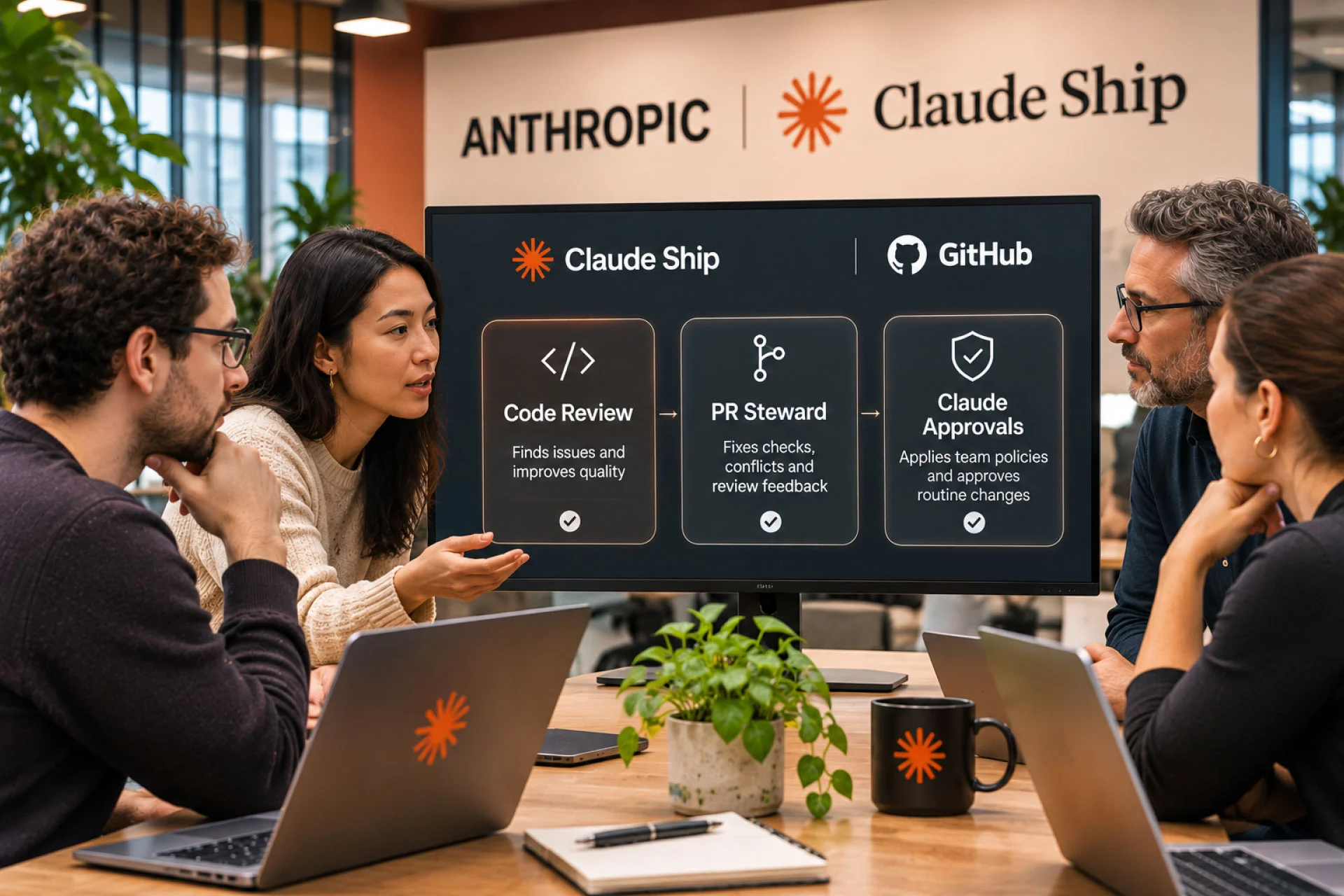
Claude Ship brings together three capabilities that address different stages of this process.
Code Review identifies potential defects and security concerns. PR Steward addresses failed checks, conflicting changes and reviewer feedback. Claude Approvals evaluates proposed changes against policies established by the development team.
Together, these capabilities can reduce the administrative and technical workload associated with preparing software changes for integration.
Anthropic reports that its Claude Code team more than doubled the number of merged pull requests between June and September, while the proportion of changes subsequently reverted decreased by more than 40%.
These figures reflect Anthropic’s internal engineering experience rather than independent performance benchmarks.
For organisations adopting intelligent development tools, the opportunity extends beyond individual developer productivity. It involves improving the efficiency of the entire engineering process.
The commercial value of intelligent software development increasingly depends on how effectively organisations move from generated code to validated, reliable software.

Delegating Authority Without Losing Accountability
The introduction of automated approval capabilities represents a significant development in enterprise software engineering.
Approving a software change involves a decision about whether that change meets the organisation’s technical and operational requirements.
Claude Approvals enables development teams to define policies that distinguish routine changes from those requiring specialist human intervention. Existing repository permissions, branch protection rules and mandatory checks continue to determine whether changes can be merged.
Anthropic recommends initially operating its approval capability in observation mode, allowing organisations to evaluate its decisions before granting operational authority.
This provides an important example of how intelligent autonomy can be introduced progressively.
Enterprise development teams should establish measurable acceptance criteria, maintain independent validation procedures and ensure that automated decisions remain traceable.
As intelligent systems assume greater responsibility, governance must extend across the complete software delivery process.
Code quality, cybersecurity, architectural integrity and regulatory compliance remain organisational responsibilities regardless of how individual development activities are performed.
For 15.Group, the introduction of Claude Ship reinforces the importance of building intelligent enterprise systems around structured policies, defined responsibilities and operational oversight.
The ability to delegate increasingly complex activities to intelligent systems creates considerable opportunities. Realising those opportunities requires enterprise architectures capable of maintaining accountability as autonomy expands.
The maturity of an intelligent enterprise will increasingly be measured by how effectively it delegates authority while retaining operational control.