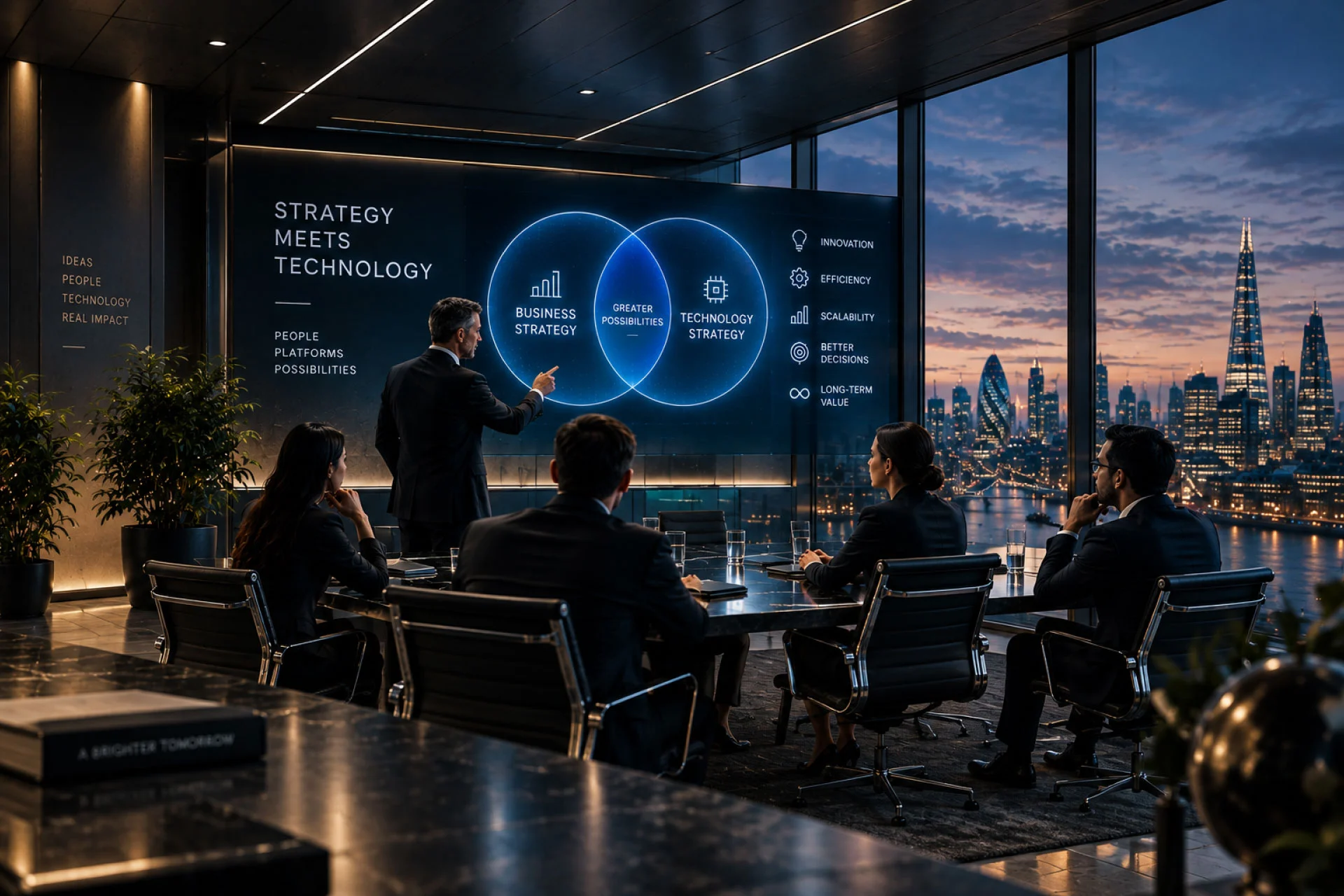
For many years, technology was treated primarily as business infrastructure.
IT departments maintained systems, networks and devices while the wider organisation concentrated on customers, operations, products and commercial strategy. Technology supported the business, but it was not necessarily considered part of the business itself.
That distinction is becoming increasingly difficult to maintain.
A retailer’s customer experience depends on technology. A logistics company coordinates physical movement through digital systems. Manufacturers increasingly connect equipment, information and operational processes. Professional services organisations depend on digital knowledge, communication and increasingly intelligent systems.
Even businesses whose products remain entirely physical now operate within environments shaped extensively by software and data.
Technology has moved from supporting how organisations operate to influencing what they are capable of becoming.
Technology Is Becoming Part of the Business Model
The significance of this change extends beyond digitising existing processes.
Technology can alter how organisations reach customers, how quickly services can be delivered, how information moves through operations and how new commercial propositions are created.
This makes technology decisions increasingly difficult to separate from business decisions.
Choosing how information is structured can affect future AI capability. Selecting enterprise platforms can influence how easily operations can change. Decisions about integration can determine whether new services connect efficiently with existing systems.
These are no longer purely technical considerations.
As technology becomes embedded more deeply within the organisation, leadership teams need to understand its strategic implications without attempting to become technology specialists themselves.
The important question shifts from “What technology does the business need?” to “What should the business be capable of doing, and what technology will make that possible?”

Technology Strategy Is Becoming Business Strategy
As technology becomes more deeply embedded in commercial activity, responsibility for it can no longer sit entirely within specialist teams.
This does not mean every executive needs to understand software architecture or artificial intelligence at a technical level. It means leadership needs sufficient understanding to recognise how technology affects the organisation’s ability to execute its strategy.
A decision to enter a new market may depend on whether existing systems can support additional operations. A new service may require information from several parts of the organisation. An acquisition may introduce another technology environment that needs to coexist with established infrastructure.
Technology therefore becomes part of strategic planning rather than something considered only after a commercial decision has been made.
The organisations that adapt effectively will be those capable of connecting commercial ambition with technological capability. That requires clearer communication between leadership, operational teams and the people responsible for designing and delivering technology.
It also requires organisations to think beyond individual projects. Systems introduced today can influence what becomes possible tomorrow.
For 15.Group, the opportunity is not to make businesses more technological for its own sake. It is to ensure that technology strengthens what the organisation is trying to achieve commercially and creates the capability to pursue what comes next.