
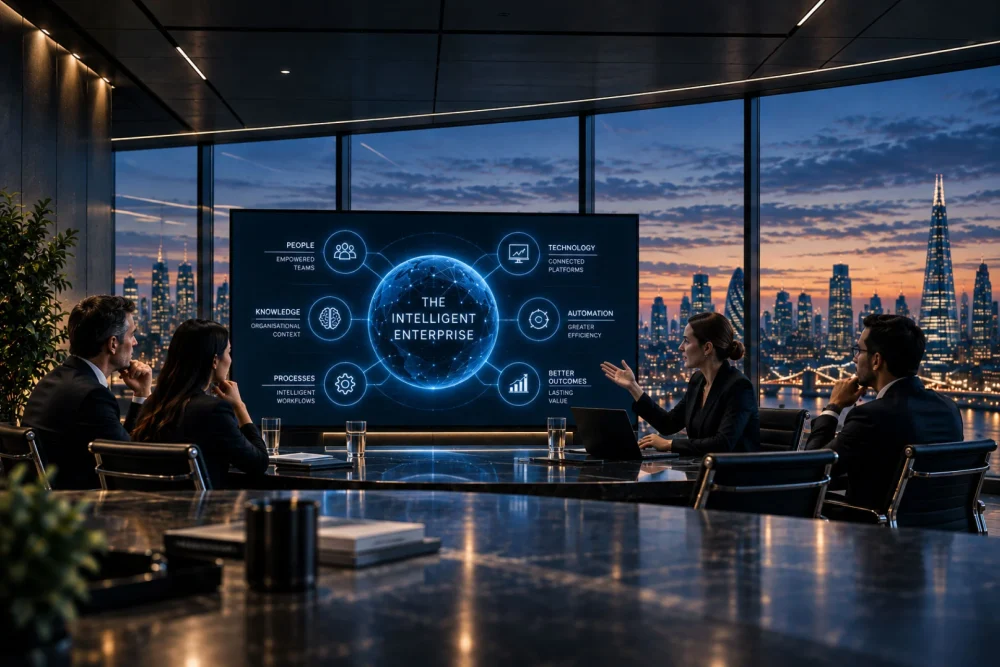
Artificial intelligence is beginning to change more than individual tasks. As intelligence becomes connected with enterprise systems, organisational knowledge, workflows and people, it can influence how an entire business operates. The intelligent enterprise is not defined by how much AI it uses, but by how effectively technology, information and human capability work together.

Artificial intelligence is becoming easier to acquire but considerably harder to integrate meaningfully into an organisation. The more important question is no longer whether a business can use AI, but whether its people, systems, information and processes are capable of working intelligently together.
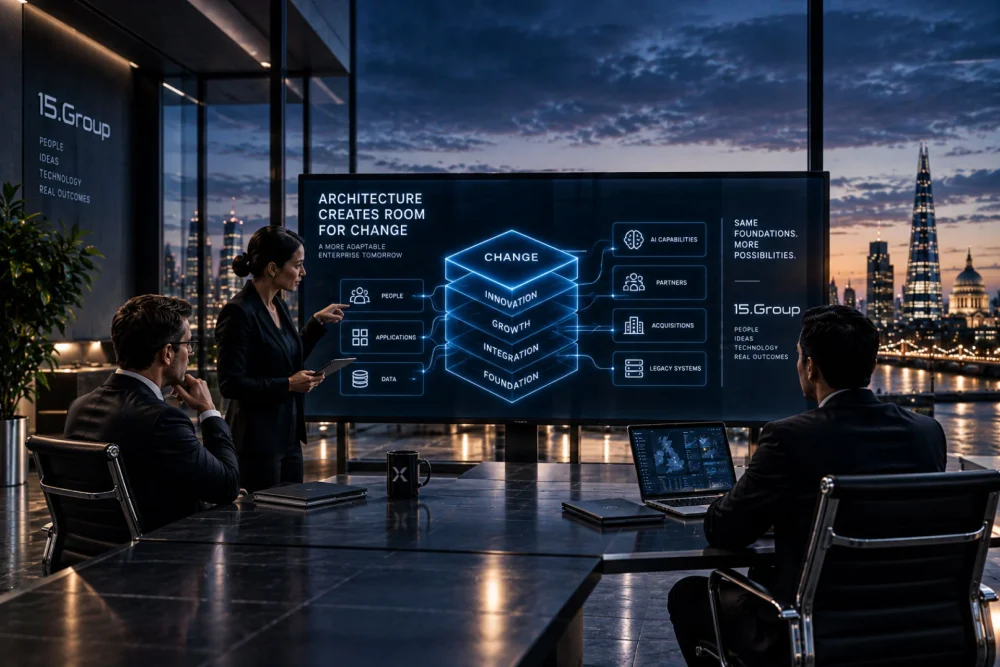
Artificial intelligence can make enterprise technology more capable, but it can also expose weaknesses that organisations have accumulated over years of growth. Disconnected systems, duplicated information and inconsistent processes become increasingly significant when intelligence needs to work across the organisation. Architecture determines whether new capabilities become part of a coherent environment or simply add another layer of complexity.
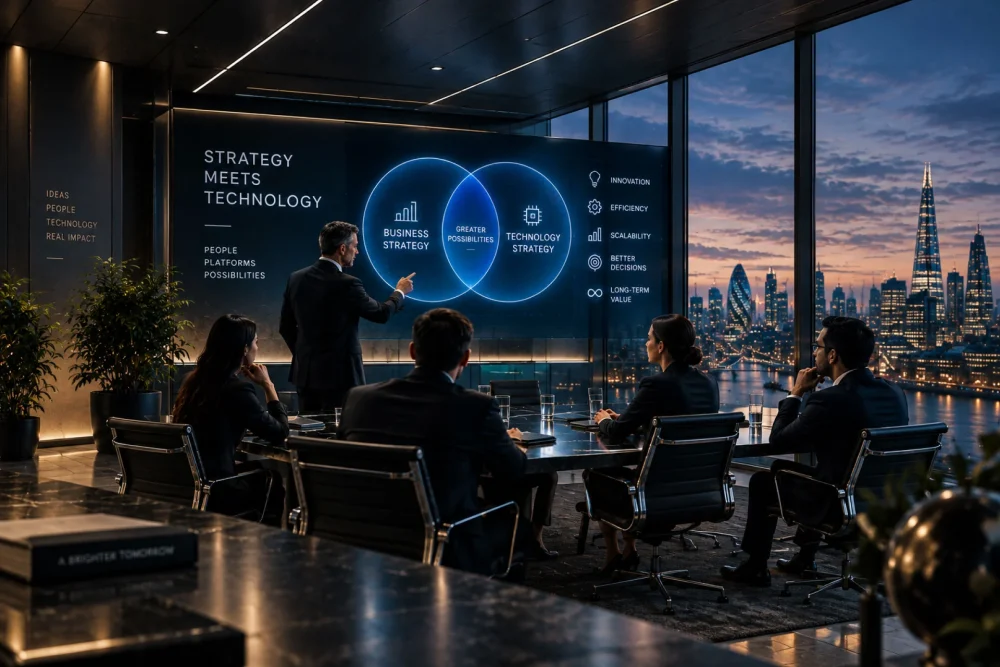
Technology is no longer confined to an IT department or a collection of supporting systems. It increasingly shapes how organisations serve customers, coordinate operations, develop products and compete. As the distinction between business strategy and technology strategy continues to narrow, organisations need to reconsider where technology sits within the business.