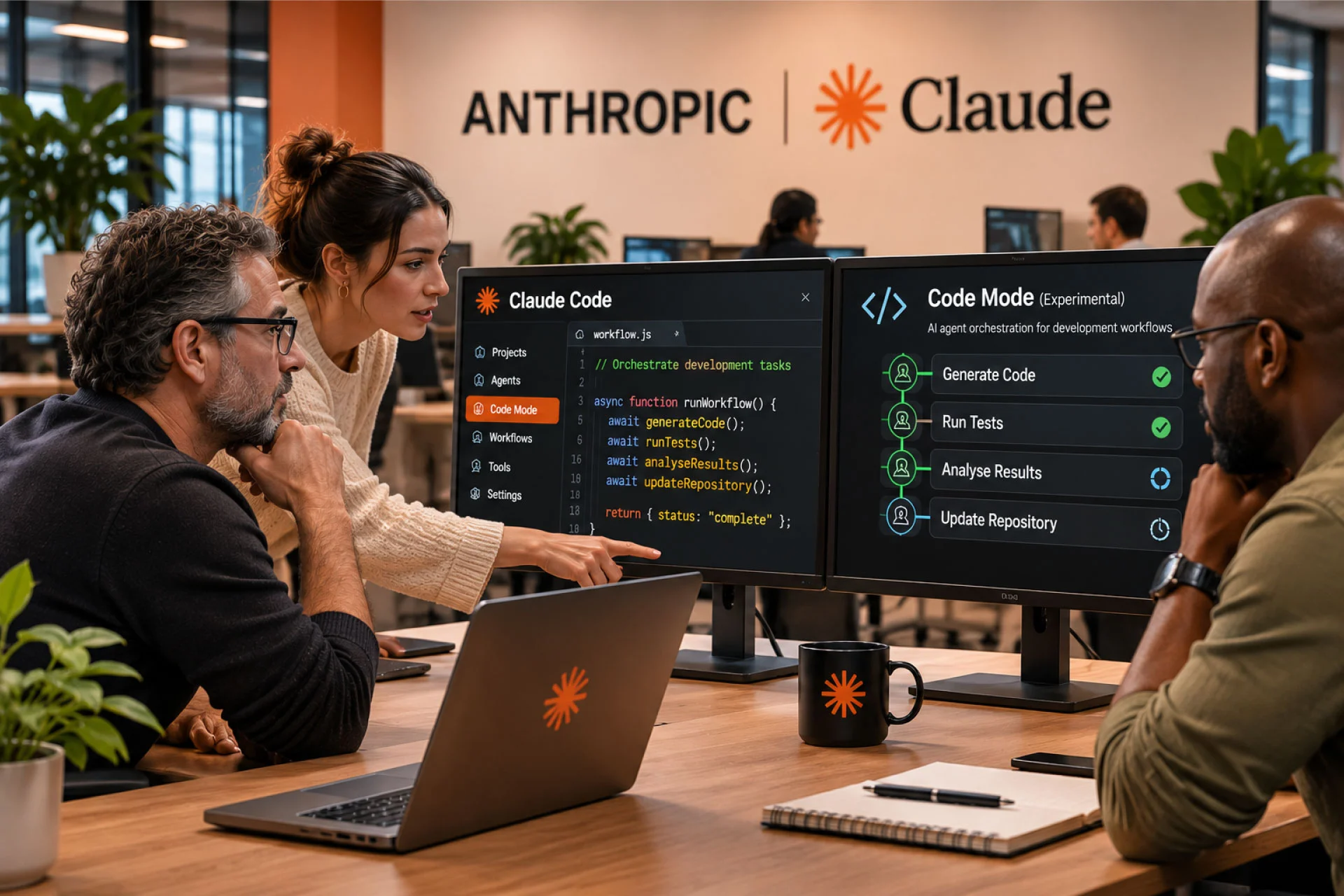
The development of artificial intelligence is increasingly focused on how intelligent systems execute and coordinate complex activities.
Early AI coding assistants primarily helped developers generate, explain and review individual sections of code. Agentic capabilities are extending this functionality across wider software development workflows.
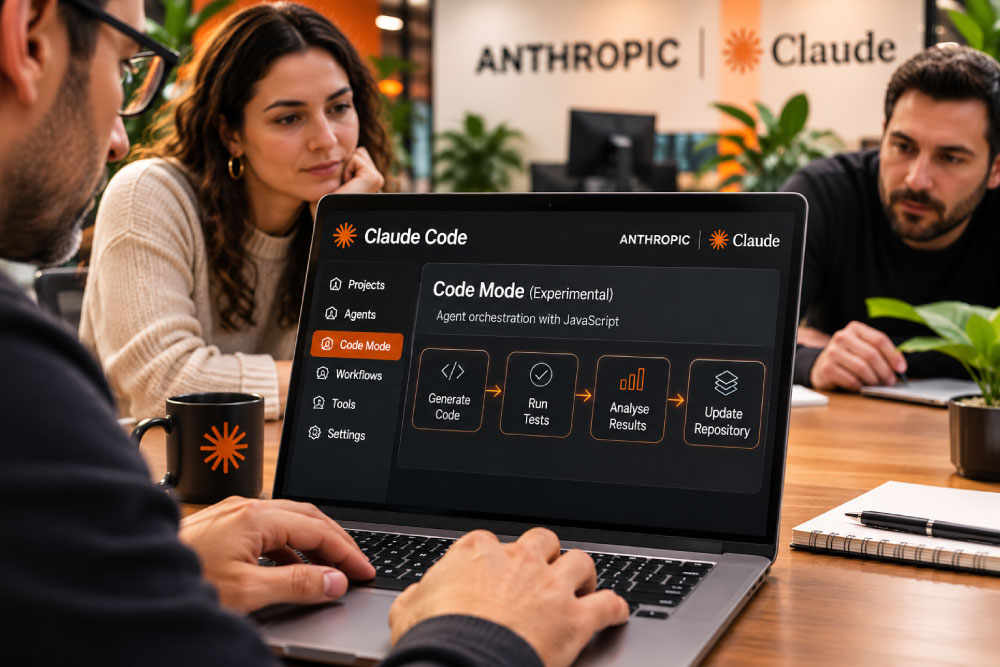
Anthropic has introduced an experimental feature within Claude Code called Code Mode, enabling its coding agent to coordinate multiple development tools using generated JavaScript.
This development provides an indication of how intelligent systems may increasingly manage interconnected tasks within enterprise environments.
From Individual Actions to Intelligent Orchestration
Complex software development involves numerous dependent activities. Engineers must locate relevant information, understand existing architecture, implement changes, validate functionality and assess potential consequences.
Code Mode allows Claude to combine related operations within a programmable workflow. Independent activities can run concurrently, while intermediate results can inform subsequent actions without requiring additional model interactions.
This creates opportunities to reduce unnecessary processing and improve the coordination of complex development tasks.
For enterprise organisations, the wider significance extends beyond software engineering.
Similar orchestration principles could support operational workflows involving multiple applications, information sources and business processes.
The challenge is ensuring that intelligent systems understand the relationships between these activities and operate within their authorised responsibilities.
Enterprise architecture must therefore provide the necessary connections, contextual information and operational boundaries.
Intelligent orchestration becomes valuable when individual capabilities work together to achieve defined organisational objectives.
Managing the Complexity of Intelligent Autonomy
As intelligent systems acquire greater responsibility for coordinating activities, organisations must consider how permissions, monitoring and accountability operate across interconnected workflows.
Anthropic’s implementation retains permission rules and execution hooks for individual tool operations. However, its automatic permission assessment evaluates generated scripts before execution and cannot assess every dynamically calculated value in advance.
This distinction highlights an important architectural consideration.
Approving an intended workflow does not necessarily establish that every subsequent action will be appropriate under all operating conditions.
Organisations need visibility into the actions intelligent systems perform, the information they access and the circumstances under which additional approval becomes necessary.
Code Mode remains experimental, with limited availability and no official performance benchmarks published at the time of reporting.
Enterprises should evaluate emerging capabilities against measurable operational requirements before introducing them into critical environments.
For 15.Group, developments such as Code Mode reinforce the importance of designing intelligent systems around coordinated capabilities, defined authority and embedded governance.
As agentic technologies mature, organisations will increasingly need architectures capable of supporting multiple intelligent activities without losing operational visibility.
The ability to coordinate intelligent actions must develop alongside the ability to govern them.