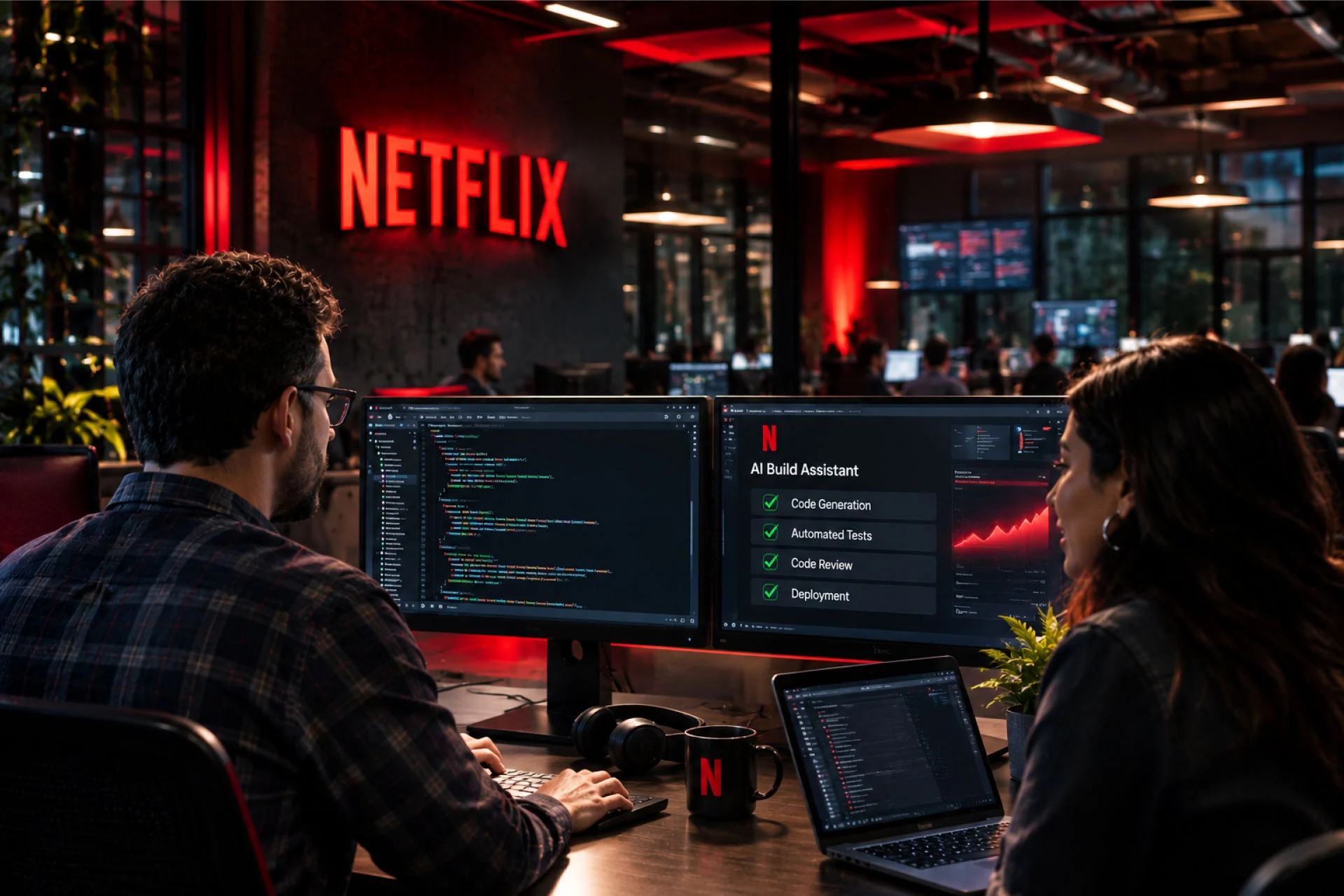
Artificial intelligence is changing how software is designed, developed, tested and maintained within enterprise environments.
However, introducing AI coding agents into existing development teams does not automatically deliver better software or faster deployment.
The surrounding engineering environment must evolve to accommodate these new capabilities.
At QCon San Francisco 2026, Netflix senior software engineer Mark Khuzam presented how the company’s Commerce team adapted its software development lifecycle to support collaboration between engineers and AI coding agents.
The experience highlights an important consideration for organisations investing in artificial intelligence. The effectiveness of intelligent systems depends heavily on the quality of the environment in which they operate.
Building an Environment for Intelligent Development
Traditional software development environments have evolved around human knowledge, experience and collaboration.
Engineers understand organisational conventions, architectural decisions and established development practices. AI agents require this knowledge to be accessible, structured and relevant to the task being performed.
Netflix addressed this challenge through context engineering, developing 45 architectural decision records alongside a wider documentation framework accessible to both engineers and intelligent systems.
This approach allows AI agents to work within established architectural boundaries rather than independently interpreting how software should be developed.
For enterprises, this reinforces the importance of structured organisational knowledge.
Documentation, development standards, system dependencies and operational requirements become essential components of an intelligent development environment.
Without this foundation, organisations risk generating software faster while introducing inconsistencies, additional technical debt and operational vulnerabilities.
The objective should be to increase development capability without compromising the integrity of the systems being created.
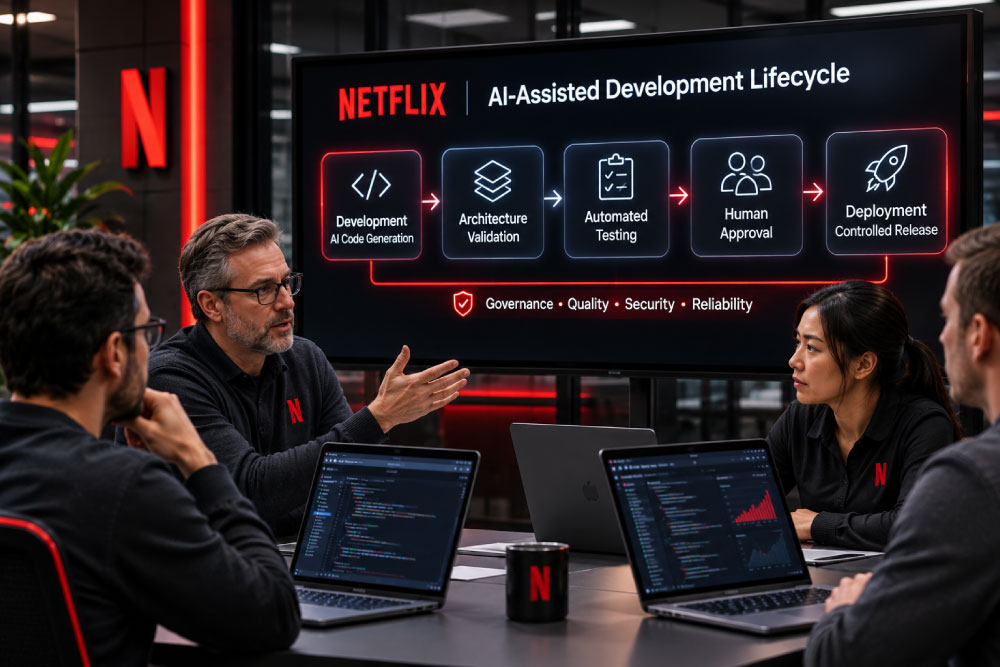
Greater Productivity Through Controlled Autonomy
Netflix reported a 32% year-on-year increase in pull requests, alongside zero Severity 1 incidents on a core service during 2026.
Developer satisfaction also improved, with the internal Net Promoter Score increasing from -3 to +25 over three quarters.
These results are particularly relevant because the engineering team retained established testing procedures, deployment safeguards and human responsibility for code approval.
AI agents support development and review activities within a controlled engineering process.
For organisations considering similar approaches, productivity should be evaluated alongside software quality, security, maintainability and operational reliability.
An intelligent development environment should allow capabilities to expand as confidence grows. Greater autonomy can follow demonstrated performance, supported by clear operational boundaries and appropriate oversight.
This reflects a wider evolution in enterprise technology. AI capabilities are becoming increasingly integrated into the processes through which organisations design, operate and improve their digital infrastructure.
For 15.Group, the Netflix example reinforces the importance of combining intelligent automation with structured knowledge, enterprise architecture and operational governance.
The future of software development will depend on how effectively organisations integrate artificial intelligence into disciplined, accountable engineering environments.