The relationship between artificial intelligence and the web is beginning to change.
Websites have traditionally been designed around human interaction. Visitors navigate pages, enter information, select products and complete transactions through visual interfaces.
As intelligent agents become more capable, organisations must consider how their digital services can support both human and machine interaction.
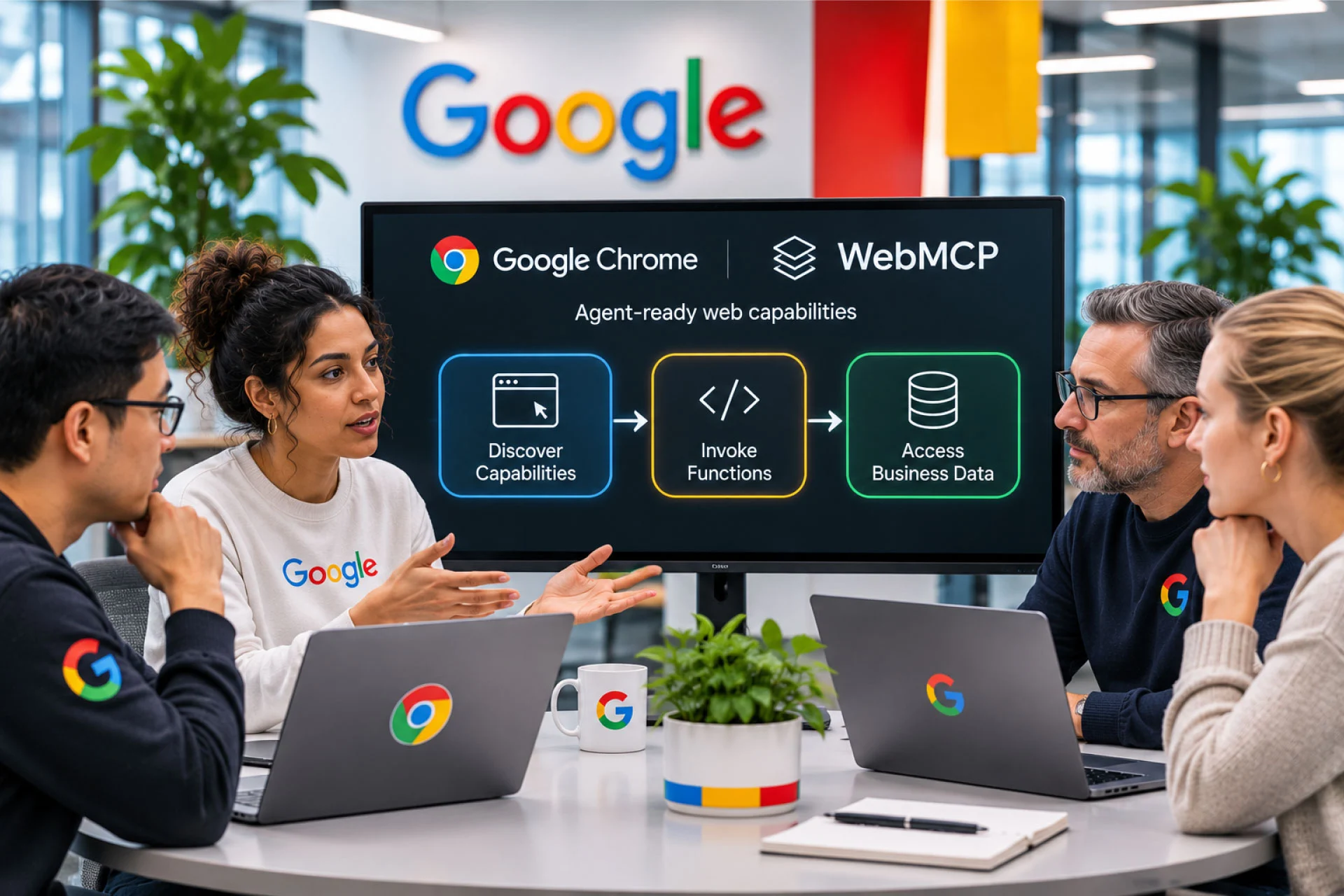
Google’s WebMCP initiative represents an emerging approach to this challenge. The proposed standard enables websites to expose defined functions that intelligent agents can discover and invoke directly.
Recent changes associated with Chrome 160 also demonstrate that the technology remains under active development, with early implementations requiring adaptation.
From Websites to Agent-Ready Digital Services
Conventional websites rely on visual interfaces to communicate available functionality.
Intelligent agents can interpret these interfaces, but navigating pages designed for humans introduces additional complexity and potential uncertainty.
WebMCP offers an alternative by allowing websites to describe specific functions and the information required to execute them.
An intelligent agent could search a product catalogue, check availability or initiate a reservation through a defined interaction with the website.
For enterprises, this introduces new considerations when designing digital platforms.
Website architecture, application functionality and structured information become increasingly important as intelligent agents participate in customer journeys and operational processes.
Organisations may need to reconsider how digital capabilities are exposed, documented and maintained.
A website could increasingly serve as an operational interface connecting customers, intelligent agents and enterprise systems.
The next generation of digital services must consider how intelligent systems discover, interpret and interact with business capabilities.
Establishing Trust Within Agentic Web Environments
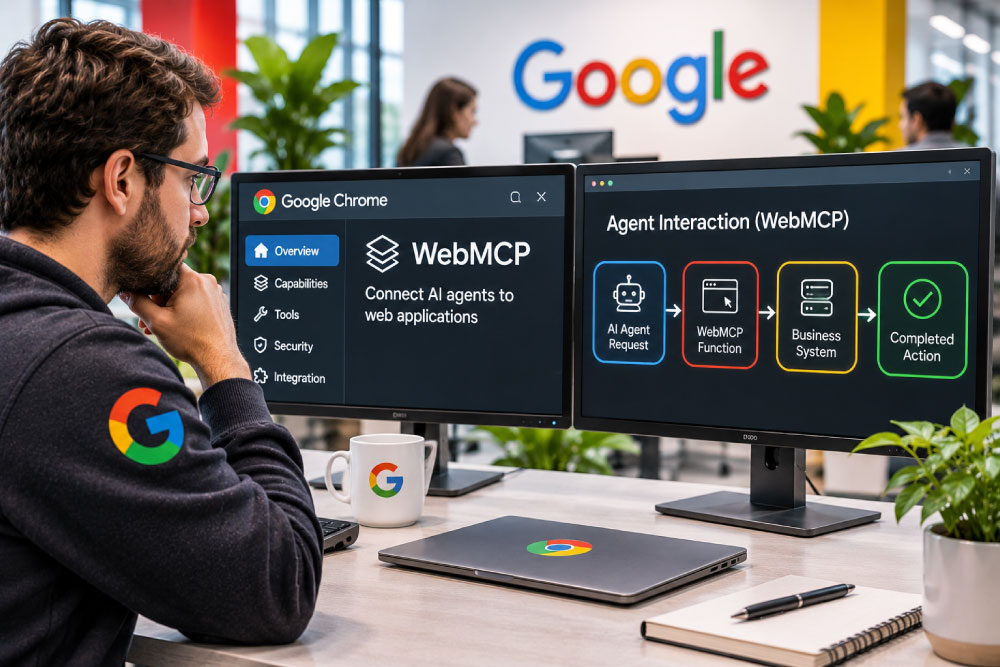
Allowing intelligent agents to execute website functions introduces responsibilities around security, permissions and accountability.
Recent modifications to WebMCP address how individual tool registrations are identified, reducing the risk of an approved function being replaced without appropriate validation.
Google is targeting an initial stable subset of the interface for early 2027, although further changes are expected during development.
For organisations, this period provides an opportunity to evaluate agent-ready web architecture before committing to production implementations.
Development teams should consider which capabilities intelligent agents can access, what information those capabilities require and which actions carry commercial or operational consequences.
Financial transactions, personal information and changes to business records may require additional validation and explicit authorisation.
These requirements extend beyond the website itself. They influence how digital platforms connect with enterprise applications, information systems and operational governance frameworks.
For 15.Group, the development of technologies such as WebMCP reinforces the importance of designing enterprise platforms around accessible capabilities, structured interactions and defined operational authority.
Organisations will need to maintain confidence in how their digital services operate as intelligent agents become increasingly involved in everyday interactions.
An agent-ready enterprise must provide intelligent systems with the ability to act while retaining control over what those actions can achieve.